The Real Cost of Cheap Embroidery: What You're Actually Paying For
Cheap embroidery looks fine when it comes out of the box. The problems show up later: after the third wash, on the reorder when the logo comes out a different shape, or the first time someone looks at it from two feet away. This article is about where the money goes when embroidery is priced properly, so you can tell the difference between a fair price and a bad one.
Where Cheap Embroidery Actually Fails
It is rarely the thread breaking. Most of the failures customers describe trace back to decisions made before the machine ever started.
Auto-digitized files
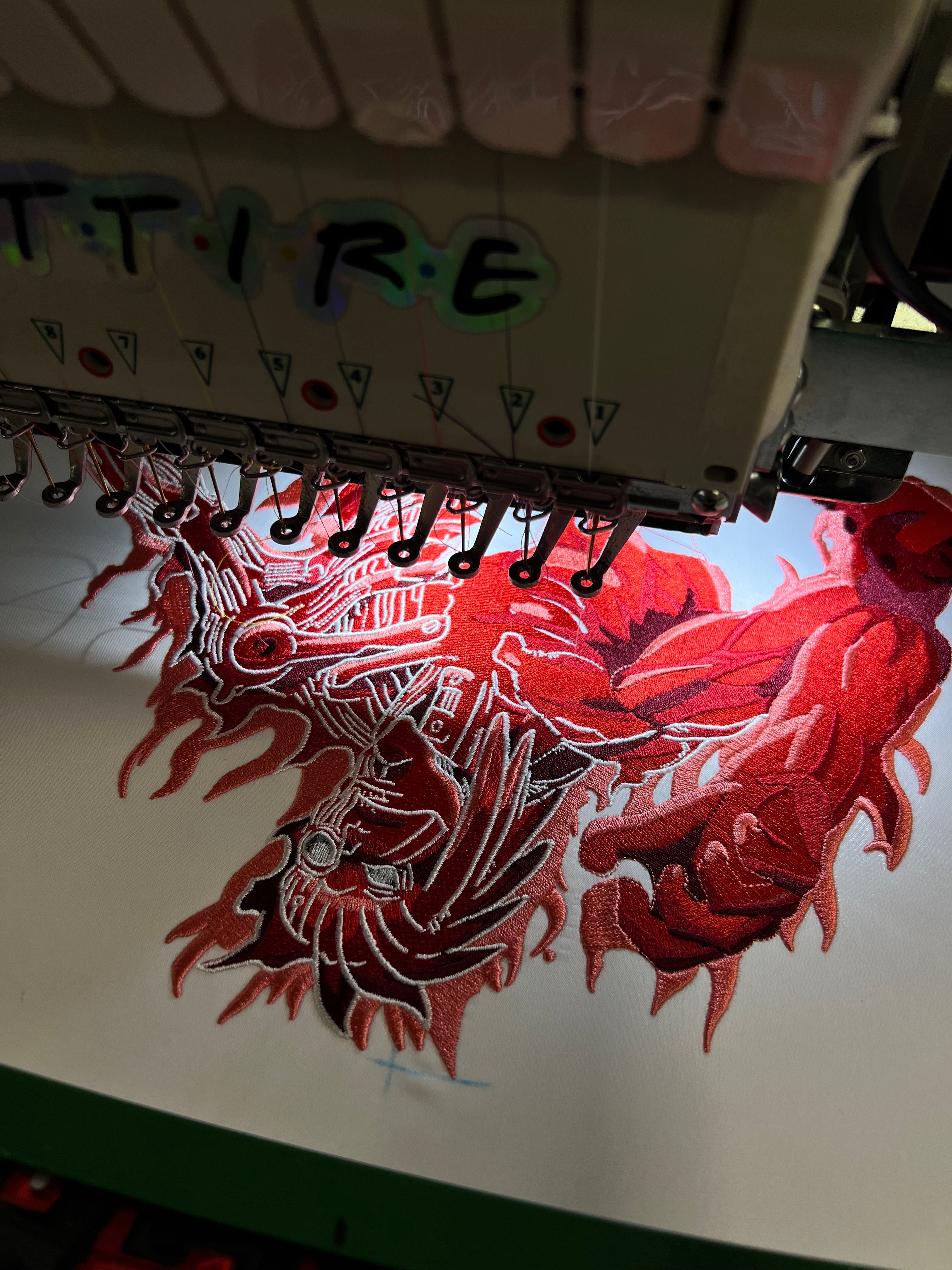
The cheapest way to get a logo onto a machine is to feed the image to auto-digitizing software. It produces a stitch file in seconds. What it doesn't do is plan underlay, vary density for the fabric, set stitch direction on purpose, or add pull compensation. The result is a fill that looks sparse with fabric showing through, an outline that misses the edge of its fill by a millimeter, and small text that closes up into blobs. The customer can see something is off but usually can't say what. We wrote a full breakdown of what digitizing involves in AI Art to Embroidery: What Actually Happens Before We Stitch It.
No test sew-out
Skip the test and the first time anyone sees the design in thread is on the customer's garment. That's when you find out the polo puckers, the cap outline is off register, or a name reads wrong because a letter filled in. A shop that sews a test catches those on a scrap. A shop that doesn't passes them to you.
Wrong backing for the garment
Stabilizer is chosen for cost instead of fabric. A thin tearaway under a stretchy pique polo lets the fabric move while it's being stitched, so the design distorts slightly on the machine. Then the garment relaxes after washing and the logo ripples. Knits and stretch fabrics need a cutaway backing that stays with the garment for life. It costs more per piece and it's the difference between a logo that lies flat for years and one that waves after a month.
Thread
Rayon thread has a beautiful sheen and is cheaper, but it's weaker and less colorfast than polyester. If you've seen a red logo bleed pink onto a white shirt, or colors go dull after a season, that's usually the thread. We stitch with Madeira Polyneon, a polyester thread built to hold color through repeated washing and bleach. It's a small cost per garment and it's the reason the line jackets we made in 2017 still look right.
Hooping
Hooping a garment straight, at the right tension, in the right spot, takes a minute per piece. Rushing it produces logos that sit crooked on the chest, hoop burn on dark fabric, and placement that varies across an order of thirty polos. It isn't glamorous work. It's most of what separates an order that looks uniform from one that doesn't.
What a Fair Price Is Paying For
When embroidery is priced properly, the money is going to specific things: someone's time to digitize the design by hand, a test sew-out before production, backing matched to the garment, polyester thread, and the minutes spent hooping every piece correctly. On our pricing page, digitizing is listed as its own line for exactly that reason. It is separate work, and it's the work that decides how the logo looks on day one and day three hundred.
One thing a fair price is not paying for is a high stitch count. Stitch count gets used as a quality signal because it's easy to quote, but a well-digitized design often has fewer stitches than an auto-digitized one, because nothing is wasted. Density is set for the fabric, not maxed out. More stitches usually means a stiffer, heavier patch that's more likely to pucker, not a better one.
The Math Over the Life of the Garment
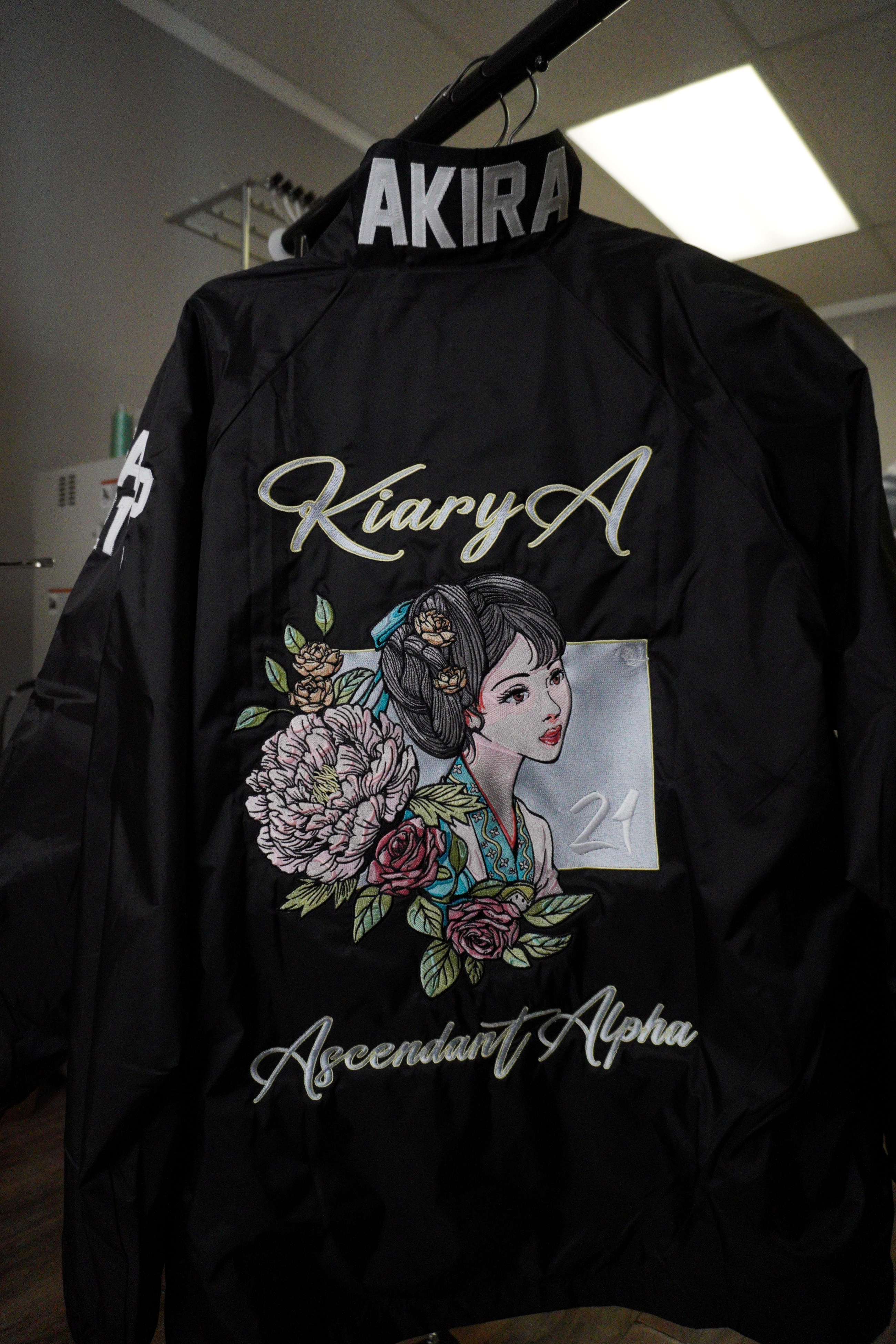
The embroidery is a one-time cost. The garment is a repeating one. A polo whose logo ripples after a month gets replaced, and the replacement is embroidered again. A jacket whose crest still looks sharp after five years doesn't. For a fraternity line jacket that's meant to be kept, or a company polo that represents you in every meeting, the cheaper embroidery is usually the more expensive one.
How to Tell Before You Order
You don't need to be an embroiderer to protect yourself. Ask the shop four questions. Is the digitizing done by a person or by software? Do you sew a test before running my order? What thread do you use? What backing goes on this garment? A shop that does the work will answer all four without hesitating. A shop that can't answer them has told you what you need to know.
Turnaround is worth asking about too. Our production time is 3 to 4 weeks after the invoice is paid. Before that, digitizing a new design usually takes 24 to 72 hours for small designs, up to a week for large ones, and one to two weeks for complex work. Quotes that promise custom embroidery in two days are usually skipping one of the steps above. Details on rush options and payment are on our FAQ page.
Get a Quote
Whether it's a line jacket, a set of company polos, or a design you've been picturing and haven't drawn yet, send it over and we'll tell you what it takes to do it properly.
Start a Line Jacket Order →
Start a Custom Embroidery Project →
Michael Hsu is the founder of Sleek Attire, a Tampa custom embroidery studio specializing in original artwork, Greek line jackets, and detailed multi-color embroidery. He has worked in embroidery since 2017.