Embroidery vs. Screen Printing: Which One Is Right for Your Design?
People ask us whether embroidery is better than printing. The honest answer is that they are different tools, and each one is the wrong choice for certain jobs. Embroidery is what we do, so we have a bias, but we'd rather you pick the right method than pick us for something that should have been printed. Here is how the two actually compare.
How Each One Is Made
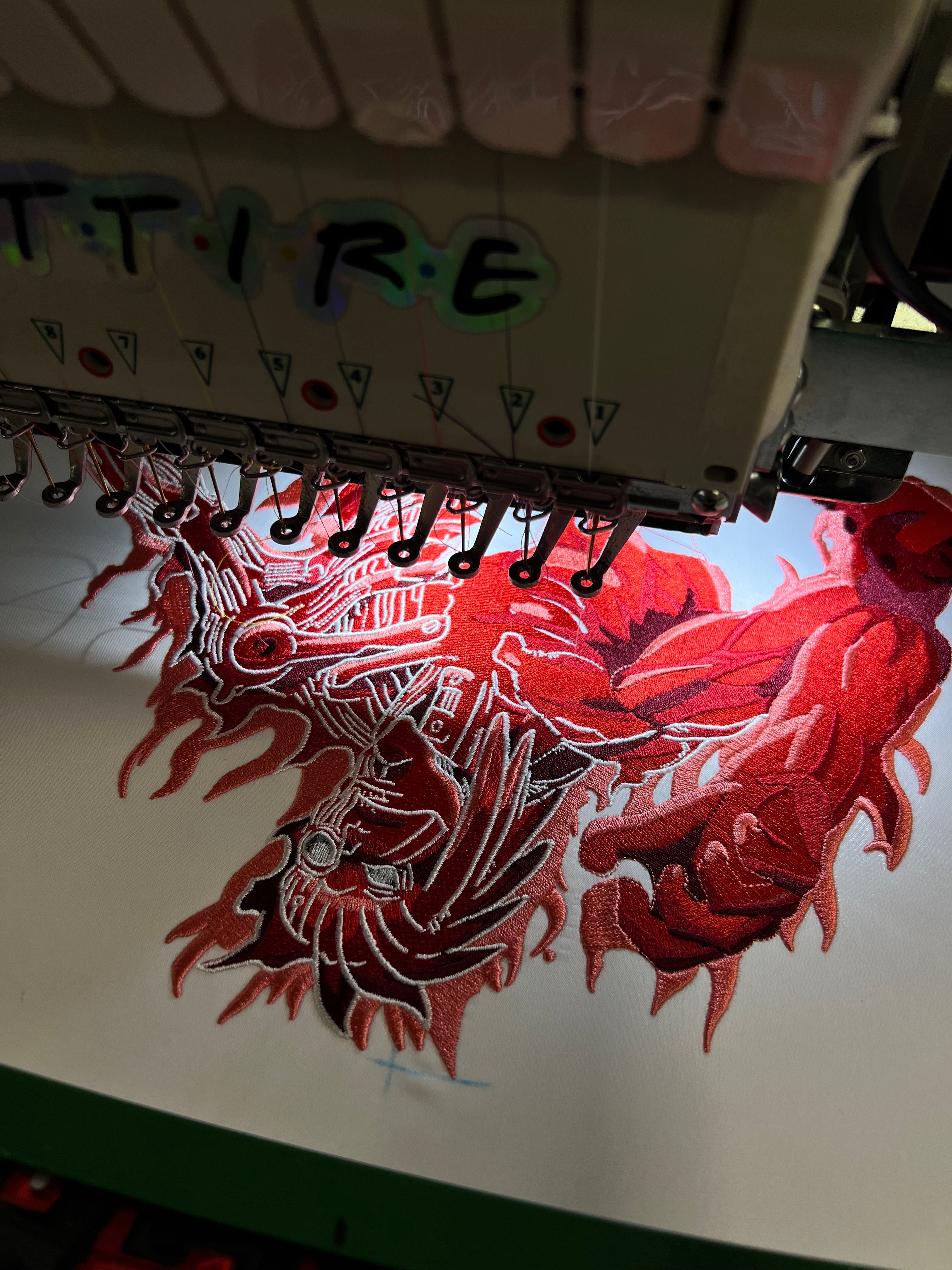
Embroidery stitches thread through the fabric. The design is physically part of the garment, raised off the surface, with a sheen that changes as the light and the stitch direction change. Before anything is sewn, the artwork has to be digitized into stitch instructions, which is a separate job we explain in AI Art to Embroidery.
Screen printing pushes ink through a mesh stencil onto the surface of the fabric, one screen per color. The design sits on top of the garment. Setup is a screen for each color, which is why printing gets cheap at volume and stays expensive for a single shirt.
Durability
This is where embroidery earns its reputation. Polyester thread stitched through the fabric holds its color and shape through years of washing. It doesn't crack, and it can't peel because there is nothing sitting on the surface to peel. We stitch with Madeira Polyneon polyester for exactly that reason.
Screen printing is more variable. A properly cured plastisol print on a cotton tee lasts a long time. An under-cured print, or a thin print on a stretchy blend, cracks in a season. The difference is the printer's process, not the method. A good print outlasts a bad one by years.
Embroidery has its own failure modes, and they're worth knowing: a poorly digitized design puckers the fabric, and the wrong backing under a knit lets the logo ripple after washing. We covered those in The Real Cost of Cheap Embroidery.
Detail and Artwork
Printing wins here, and it isn't close. Ink can reproduce photographs, smooth gradients, hairline strokes, and tiny text. Thread has width, so fine detail has to be enlarged, simplified, or removed at the finished size, and gradients have to be rebuilt as stepped colors or directional stitching. If your design is a photo, a watercolor, or a dense illustration with a lot of fine lines, print it.
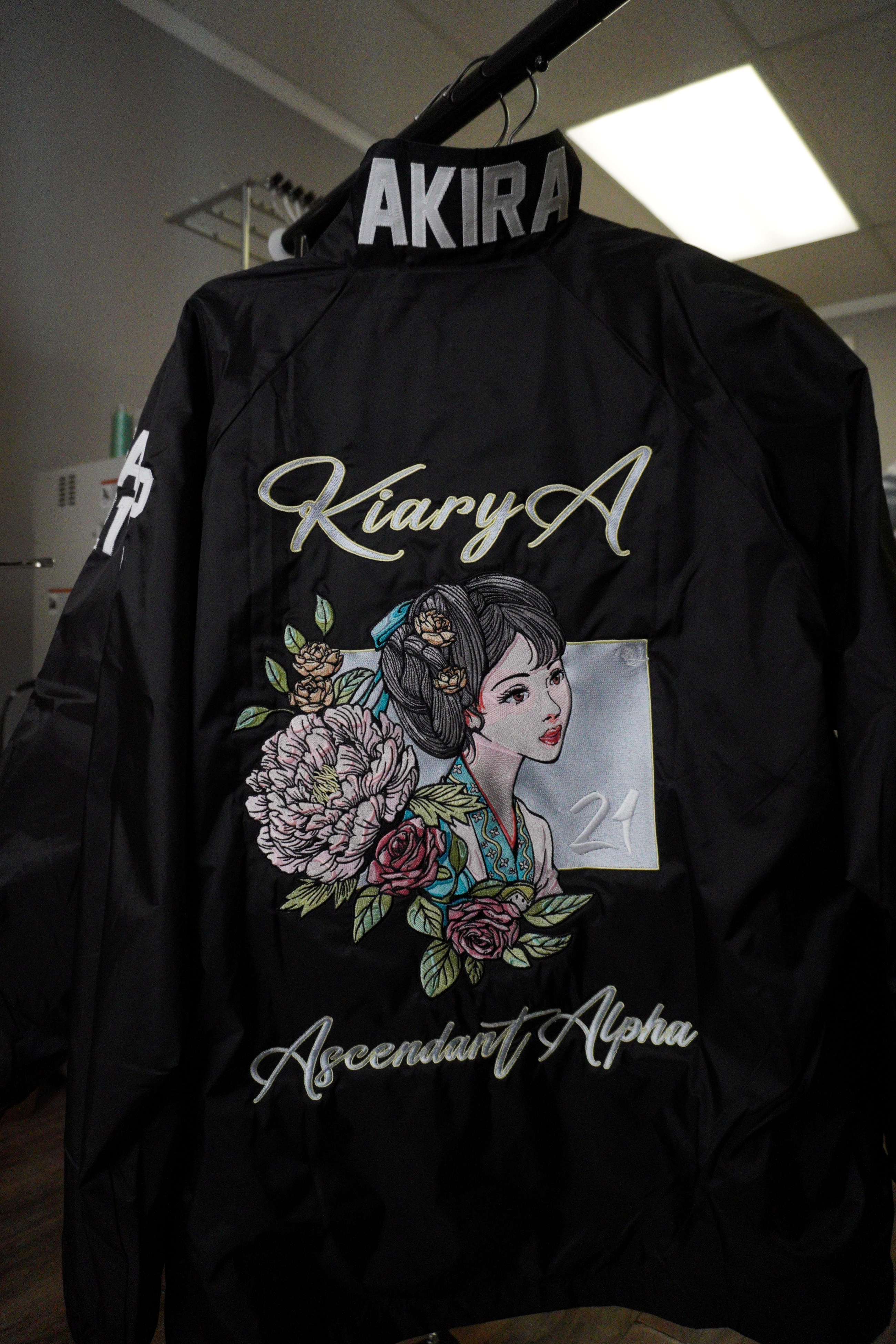
Embroidery wins on things with clear shapes and solid colors: lettering, crests, logos, mascots, Greek letters. It gives them a texture and depth that flat ink can't. That's why a fraternity crest is embroidered and a concert poster is printed.
Size
A full-back print on a hoodie is routine for a printer and costs about the same as a chest print. A full-back embroidery is thousands of stitches, takes real machine time, and adds weight and stiffness to the garment. Large designs favor printing. Small and mid-size designs, roughly the size of a left chest logo up to a jacket back crest, are where embroidery is at its best.
Cost and Quantity
Screen printing has a setup cost per color, then a low cost per shirt. For fifty event tees in two colors, printing is far cheaper. For one shirt, the setup makes it expensive.
Embroidery has a one-time digitizing cost, then a per-piece cost driven mainly by stitch count. It doesn't get dramatically cheaper at volume, but it doesn't punish small orders either. One jacket or a dozen polos with the same logo costs roughly the same per piece once the design is digitized. That's why embroidery suits small runs and one-offs and printing suits bulk.
Fabric
Embroidery works on caps, polos, jackets, fleece, denim, twill, canvas, and most mid-weight fabrics. It needs a garment with enough body to hold the stitches. On a very thin tee or a lightweight performance fabric, dense embroidery can pucker or show through, and the needle perforations weaken the fabric around the design.
Printing works on nearly anything flat, including those thin tees. It struggles on textured surfaces like pique polos, fleece, and structured caps, where the ink can't lay down evenly. Those are the garments that get embroidered for a reason.
Feel and Weight
Embroidery has a raised texture you can feel through the garment, and a large design adds a stiff panel. Some people like the weight; on a lightweight shirt it can be uncomfortable. A print is flat and, with water-based inks, can be almost undetectable by touch. If the garment is meant to feel soft and light, print it.
The Short Version
| Embroidery | Screen printing | |
|---|---|---|
| Best for | Logos, lettering, crests, Greek letters | Photos, gradients, fine detail, large art |
| Garments | Caps, polos, jackets, fleece, denim | Tees, lightweight blends, flat cotton |
| Quantity | One-offs and small runs | Bulk orders |
| Size | Chest logo to jacket-back crest | Any size, including full back |
| Durability | Years; can't crack or peel | Depends on cure and fabric |
| Feel | Raised, textured, adds weight | Flat, light |
| Setup | One-time digitizing | One screen per color |
When We Tell People to Print Instead
It happens more than you'd think. If someone sends us a photographic design for a lightweight tee in a run of a hundred, embroidery is the wrong answer and we'll say so. If they want their organization's letters on twenty jackets that will be worn for years, embroidery is the only answer. The design, the garment, and the quantity decide it, not the method someone happens to sell.
Not Sure Which You Need?
Send us the design and tell us what it's going on. We'll tell you whether it should be stitched, and what it would take to do it right.
Start a Custom Embroidery Project →
Start a Line Jacket Order →
Michael Hsu is the founder of Sleek Attire, a Tampa custom embroidery studio specializing in original artwork, Greek line jackets, and detailed multi-color embroidery. He has worked in embroidery since 2017.